Atlassino Academy
A course for adults who are going to a land-based casino in Canada, or already go and want to understand what is happening at the table. It teaches you to play without mistakes, to know what an hour costs, and to spot the stories people tell about luck.
Two illustrated hosts, Leo and Maya, take one moment of a game apart at a time. A lesson runs about 14–32 minutes, and you can stop after any one of them.
What the course does not promise
The house keeps its edge in every game against the casino; the course shows its price and how to pay less of it. Nothing here tells you how an evening will end.
New to casinos? Start here

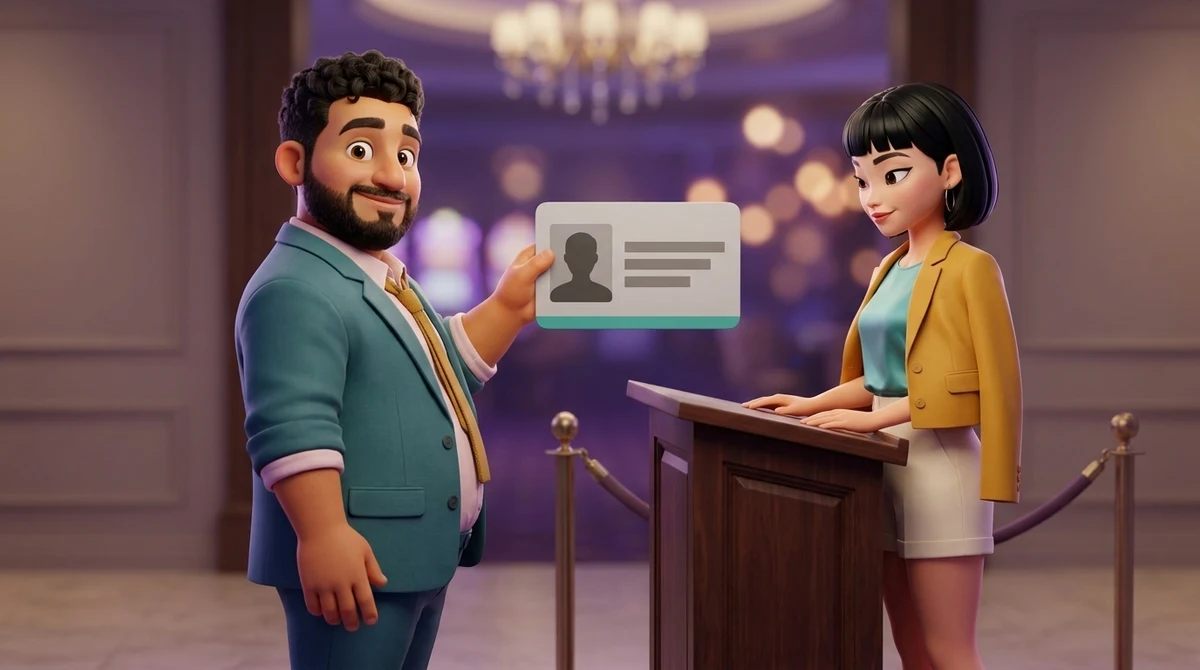
Track 0 walks through one visit in order: the door, the money you decide on before you leave home, finding your way on the floor, chips and the cashier, sitting down at a table, reading the table sign, choosing which table to sit at, and ending the night. It is 8 lessons, about 190 minutes in all.
The tracks
The course has 11 tracks and 106 lessons, of which 106 are built and open below; the rest are written in the order set out in our course plan. A lesson appears here as a link only once it exists.
From the door to the end of the night: age and ID, the money you decide before you go, the floor, chips, joining a table, the table sign, choosing a table and leaving.

Where the price of a game comes from, what an hour costs, why one night says little, and who runs and checks Canadian casinos.
Open 1.1 The house edge: a price inside every bet
The lessons in this track
- 1.1The house edge: a price inside every bet
- 1.2What an hour of play costs
- 1.3Why you lose more than the edge
- 1.4Do cards, dice and wheels remember?
- 1.5One night versus a thousand
- 1.6Who runs Canadian casinos and who checks them
- 1.7What the casino records about your play
- 1.8"To 1", "for 1" and the chance behind them

What a spin costs, what return to player does and does not tell you, near misses, bonus rounds, jackpots and staying in charge at a machine.
Open 2.1 Reels, lines and what a spin costs
The lessons in this track
- 2.1Reels, lines and what a spin costs
- 2.2Return to player: twins that aren't
- 2.3Hit frequency and volatility
- 2.4Virtual reels and the near miss
- 2.5When the lights flash for a loss
- 2.6Bonus rounds: who pays for the extra spins
- 2.7Jackpots and progressive meters
- 2.8Due, hot, cold and the stop button
- 2.9Electronic table games
- 2.10Staying in charge at a machine
Card values, how a round goes, the chart for your province, the rules on the table sign, insurance, side bets and the variants.
Open 3.1 Card values, soft and hard hands
The lessons in this track
- 3.1Card values, soft and hard hands
- 3.2How a round goes, province by provincereads the published rules of three casino operators; what the cards count is lesson 3.1 and what each move is is lesson 3.3
- 3.3Hit, stand, double, split, surrenderassumes you know what the cards count and how a round goes, which lessons 3.1 and 3.2 teach
- 3.4Hand signals, chips and table manners
- 3.5Why you act first, and what it costs
- 3.6When to hit or stand on a hard totalassumes you know how a hand of blackjack goes, which lessons 3.1 to 3.5 teach
- 3.7Doubling down: a second bet on one cardassumes you know what doubling is: a second bet and exactly one more card
- 3.8Soft hands: the ace that can't bust you
- 3.9Pairs: when to splitassumes you know what splitting is and how a hand of blackjack goes, which lessons 3.1 to 3.5 teach
- 3.10The whole chart and your printed card
- 3.11The rules on the sign, and what they change
- 3.12Insurance and even money
- 3.13Side bets: the price per hour
- 3.14Who pays for a "Free Bet" double or split
- 3.15Spanish 21: a shorter deck and its own chart
- 3.16Card counting: what it is and isn't
- 3.17Third base, hot tables and the table's mood
- 3.18Blackjack Switch: when to trade the second cards
- 3.19Zappit: trading a bad hand for two new cards
- 3.20Double Down Madness: one card, many doubles
- 3.21Bahama Bonus: no tens, bonuses and redoubles

The wheels and how many zeros they carry, what every bet on the layout pays, why they all cost the same, and reading the board of past numbers.

The table and its crew, the line and the point, the odds bet, place bets, the centre of the layout and an evening at a known price.
Open 5.1 The craps table and its crew
The lessons in this track
- 5.1The craps table and its crew
- 5.2The come-out roll and the point
- 5.3The pass line
- 5.4Odds: the bet without an edge
- 5.5Come bets
- 5.6Don't pass, don't come and laying odds
- 5.7Place bets and their payouts
- 5.8The field and Big 6 / Big 8
- 5.9Centre bets and the Fire Bet
- 5.10Shooting the dice and table manners
- 5.11A craps evening at a known price
- 5.12Hot shooters and dice setting
Counting a baccarat hand, the chart the dealer follows, commission, the pace of the game, the squeeze and the scoreboard.
Open 6.1 Counting a baccarat hand, and where you bet
The lessons in this track

Hand rankings, how a hand is dealt, the room and its rake, table rulings, outs and pot odds, tournaments and when to leave.
Open 7.1 Poker hands, from high card to royal
The lessons in this track
- 7.1Poker hands, from high card to royal
- 7.2Blinds, button and betting rounds
- 7.3The poker room: list, buy-in, stakes, rake
- 7.4Binding actions and one player to a hand
- 7.5The showdown: kickers and split pots
- 7.6Starting hands: how often and how far ahead
- 7.7Outs and the exact odds
- 7.8Pot odds: a decision, not a result
- 7.9The nuts, the board and blockers
- 7.10Rake, swings and who pays for the room
- 7.11Tournaments: buy-in, structure and M
- 7.12Chips are not money: the final table
- 7.13Tilt, and when to leave the room

How a machine deals and draws, reading a pay table, what the coins do, which cards to hold and what a wrong hold costs.

What the smaller tables cost an hour and how to choose among them: Three Card Poker, Pair Plus, Ultimate Texas Hold’em, Let It Ride, Pai Gow Poker, Sic Bo and the money wheel.
Open 9.1 Three Card Poker: Ante and Play
The lessons in this track
- 9.1Three Card Poker: Ante and Play
- 9.2Pair Plus and the 6 Card Bonus
- 9.3Ultimate Texas Hold'em: how a hand goes
- 9.4Raise big, raise small or fold
- 9.5Let It Ride
- 9.6Pai Gow Poker: the deal and the price
- 9.7Setting the seven cards yourself
- 9.8Sic Bo: three dice
- 9.9The money wheel
- 9.10Choosing among the other tables

How far a night can swing and how it ends, what betting systems do and do not change, and chasing losses.
Open 10.1 Swings, goals and running out
The lessons in this track
Your two hosts

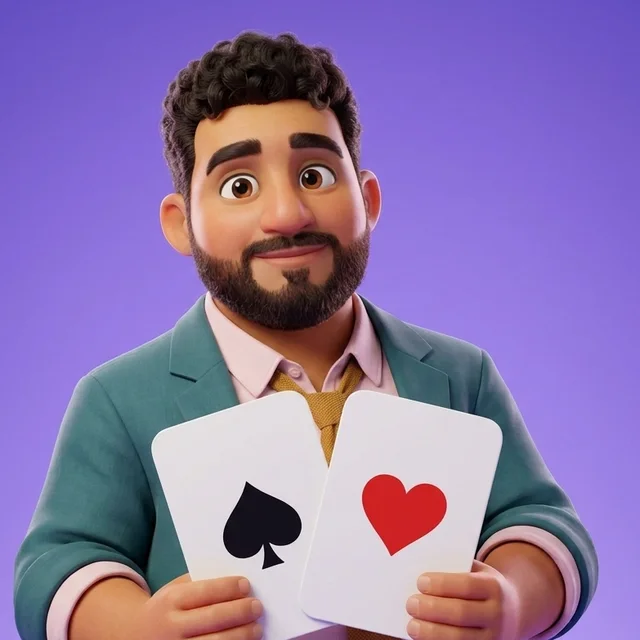
Leoformer dealer · rules and maths
Leo takes the rules, the order of play and the arithmetic. His line: “Let’s count it.”

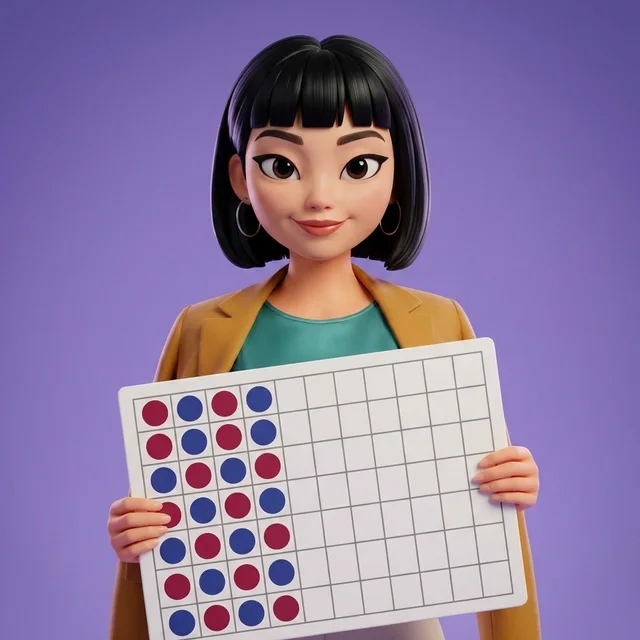
Mayaformer floor supervisor · manners, money and breaks
Maya takes manners at the table, money and time, breaks, and the stories people tell about luck. Her line: “Decide it before you sit down.”
Leo and Maya are illustrated characters; their backstories, a former dealer and a former floor supervisor, are written for the course. Neither is a real person, and neither speaks for any casino.
How a lesson works
- A question first One question before the subject, with no score: it is there to make the answer stick, not to test you.
- A worked example A host takes one moment apart step by step, then hands you the last step, then the whole thing.
- A practice table A real moment of the game: you decide, you see what happened, what it cost on average, and why the answer is the answer.
- Questions with the reasoning Three to five questions, and every option has its own explanation, not just the right one.
- A card for the table A few lines to print or keep on your phone, with the province’s helpline on it.
Every figure in a lesson is worked out when the page is built, by the same engines as our tools, or comes from a source quoted on the spot. More on how we verify.
Nothing you do in a practice table leaves your browser: what you answered is kept on this device and is sent nowhere.
Where you left off
Progress is kept on this device only: nothing about what you answered is sent anywhere, and there is no account. Anyone using this device can see this.
This part needs JavaScript: without it the page cannot read what this device has saved.
The words used at a table
One meaning per word across the whole course. A lesson explains a term the first time it uses it; here they are together.
The course glossary
- shoe
- the box the dealer deals from, holding several decks shuffled together
- round
- one full go of the game: bets down, cards or dice, then settling
- rounds an hour
- how many rounds a table gets through in an hour, which is what turns a bet into an hourly cost
- betting spot
- the marked place on the cloth where your bet goes
- table sign
- the small sign at the table giving the minimum and maximum bet, the payout and the rules of that table
- minimum
- the smallest bet the table takes, for each bet on your spot
- maximum
- the largest bet the table takes, for each bet on your spot
- push
- a tie: your bet comes back and nothing is paid
- bust
- a hand over 21, which loses at once
- "no more bets"
- the dealer’s call that closes betting for the round; in Quebec, "Rien ne va plus"
- dolly
- the marker the dealer puts on the roulette number that came up; nobody touches chips until it comes off
- felt
- the cloth of the table, where the bets and the cards go
- dealer bet
- a tip put down as a bet played for the dealer, which is settled like any other bet
- reserved marker
- the small marker a dealer puts on a spot whose player has stepped away for a moment
- button
- the disc that marks which poker seat is dealing this hand; it moves one seat on every hand
- blackjack
- twenty-one on your first two cards: the one hand a table pays at a rate of its own
- side bet
- an extra bet in a circle of its own, with its own limits and its own pay table
- inside bet
- a roulette bet on the numbers themselves
- outside bet
- a roulette bet around the edge of the cloth: red, black, odd, even, columns and dozens
- commission
- a share the table keeps out of a bet that pays, rather than out of the bet you put down
- cashier (the cage)
- the window where chips and slot tickets become money
- buy in
- to change cash for chips at the table
- value chips
- ordinary chips with an amount printed on them, good anywhere in the casino
- roulette colour chips
- chips of one colour used by one player at one roulette table, with no amount printed on them
- colour up
- to swap a pile of small chips for fewer larger ones before you leave the table
- slot ticket
- the printed slip a machine gives you instead of coins, cashed at the cage or a kiosk
- credits
- what a machine counts your money in on screen, which is not the same as dollars until you cash out
- bet
- the money you put on one round
- turnover
- all the money that goes over the table in an evening: the same dollars again and again
- house edge
- the share of every dollar bet the casino keeps on average, over many rounds
- price of an hour
- bet, times rounds an hour, times the house edge: what an hour of a game costs on average
- money an hour
- how much of your own money you plan to spend in an hour, which is a decision, not a figure of the game
- limit
- the money and the time you decide on before you go: a ceiling, not a target
- limit in bets
- your limit counted in bets rather than dollars: $100 at $10 a bet is ten bets
- kiosk
- a machine on the casino floor that turns a slot ticket into cash
- gaming floor
- the part of the casino where the games are
- security
- the staff at the doors who check who comes in, and at some casinos keep what has been handed in
- government photo ID
- a card issued by a government showing your photo and your date of birth: a driver’s licence, a passport, a provincial ID card
- original document
- the card itself, not a photo of it and not a photocopy
- second piece of ID
- another document carrying the same full name as the first
- minimum age
- the age from which a casino admits visitors, set by the province the casino stands in
- facial recognition
- a system that compares faces at the door with photos taken when people joined a self-exclusion program
- bag check
- a search of bags at the entrance; some casinos refuse entry to anyone who declines it
- dealer
- the person who runs the game at the table
- supervisor
- the staff member responsible for several tables, who settles anything the dealer cannot
- slot attendant
- the staff member who looks after the machines and pays out what the machine cannot
- brush
- the staff member who keeps the poker room list and calls players to a seat
- Guest Services
- the desk near the entrance that answers questions about the building
- help centre
- the desk inside the casino where trained staff answer questions about gambling and about stopping
- coat check
- the counter that takes your coat, and the bag security asks you to leave
- blinds
- the two forced bets that start a poker hand, and the two amounts a game is named by
- denomination
- the amount printed on a chip, which is what the chip is worth
- cash change
- the dealer’s call before counting the money you have put down on the table
- chip rack
- the shelf in front of your seat where your own chips sit while you play
- decision
- a choice you make after the bet is down that changes what the round costs on average; roulette and baccarat have none
- electronic table
- a terminal where you bet on a game run by a screen instead of a dealer; the smallest bets are often lower, and how fast one runs is not published
- self-exclusion
- a provincial programme you sign yourself into, which closes the casino door to you for the term you choose
- helpline
- a confidential phone line, at no charge, for anyone with questions about their own or someone else’s gambling
- 9-8-8
- the Canada-wide line to call or text if you are thinking about suicide
- chasing losses
- playing on to get back what the evening has cost, which raises the cost rather than returning it
Further reading
Official guides first, then the books our figures lean on. No shops, no affiliate links.
- PlaySmart · Ontario Lottery and Gaming CorporationThe province’s own guide to how the games work and where to get help.
- Practical Casino Math · Robert C. Hannum and Anthony N. Cabot, 2nd edition, 2005The mathematics of casino games as an operator sees it. Link: library catalogue search.
- Casino Operations Management · Jim Kilby, Jim Fox and Anthony F. Lucas, 2nd edition, 2005How a gaming floor is run, and how fast each game is dealt. Link: library catalogue search.
Game and bet names are trademarks of their owners and are used only to describe the games.
If it stops being fun
If gambling stops being entertainment, help is available. 19+ in most of Canada; 18+ in Alberta, Manitoba and Quebec. More on responsible gaming. Every province also runs a self-exclusion programme you sign yourself into.
Under the age for a casino: 1-800-668-6868 Kids Help Phone, 24 hours.
Spotted a mistake on this page? Tell us
Been here before? Review us on Trustpilot